
When the internal active lithium ions are exhausted,
is the only way for lithium batteries to be scrapped?
The Peng Huisheng/Gao Yue team of the Department of Polymer Science at Fudan University has provided a new path. They have innovatively designed lithium carrier molecules, which can be injected into waste or decaying lithium batteries in a “shot” manner like drugs, accurately replenishing the lost lithium ions and restoring capacity, thereby greatly extending the life of the battery. On February 13, Beijing time, the relevant results were published in the international academic journal Nature.
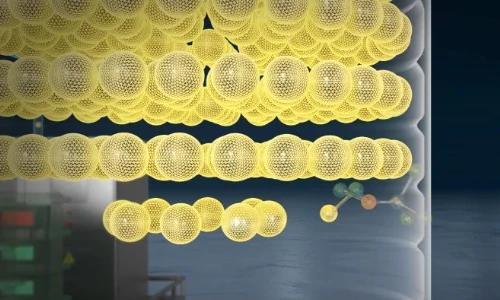
Gao Yue, a member of the research team and a young researcher at the Department of Polymer Science at Fudan University, said that after in-depth analysis of the basic principles of batteries and a large number of experimental verifications, the team proposed a bold idea – designing lithium carrier molecules, injecting them into batteries, and individually controlling the lithium ions in the batteries.
According to reports, lithium carrier molecules must have strict and complex physical and chemical properties, and this molecular mechanism has not been reported before, and cannot be designed based on theory and experience. To this end, the team used artificial intelligence, combined with chemical informatics, to digitize the molecular structure and properties, introduced a large number of related properties in organic chemistry, electrochemistry, and materials engineering technology, built a database, and used machine learning to recommend and predict molecules, and finally successfully obtained a lithium carrier molecule – lithium trifluoromethylsulfinate.
After the molecule was synthesized, the team verified that it met various stringent performance requirements, and was low-cost, easy to synthesize, and had good compatibility with various battery active materials, electrolytes, etc. Experiments on real lithium battery devices have proved that the new technology can make the battery still show a healthy state close to that at the factory after tens of thousands of charge and discharge cycles, and the cycle life has been increased from the current common 500 to 2000 cycles to 12000 to 60000 cycles.


