
Abstract
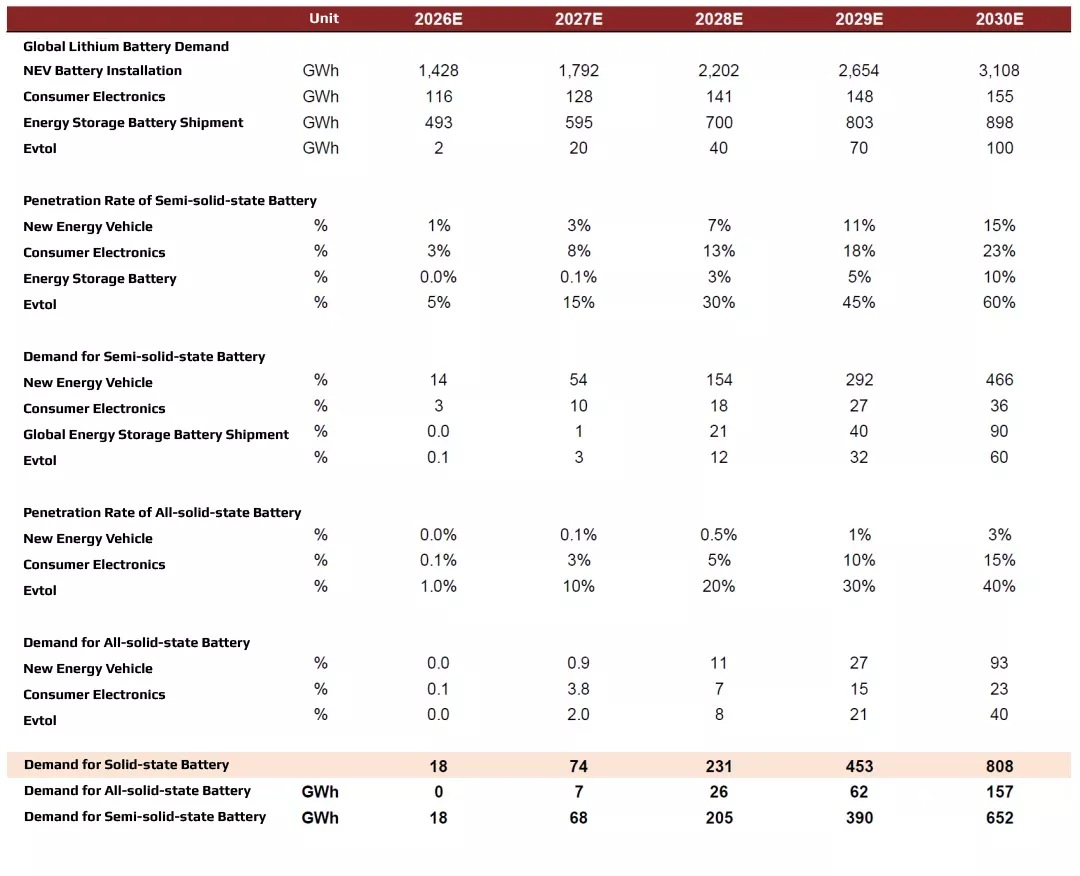
Solid-state batteries: Driven by policy, demand, and technology, the commercialization of solid-state batteries is accelerating. With their superior safety and energy density, solid-state batteries hold broad application prospects in new energy vehicles, low-altitude vehicles, and consumer electronics. We believe solid-state batteries are expected to first achieve large-scale mass production in the eVTOL and consumer electronics sectors, driving cost reductions, followed by gradual mass production and installation in the powertrain sector. We estimate that global solid-state battery shipments will reach 808GWh by 2030. We anticipate that all-solid-state batteries will achieve technical finalization and small-scale mass production by 2027, and commercial mass production by 2030, with demand expected to exceed 150GWh. The corresponding solid-state installation demand for powertrain, eVTOL, and consumer electronics will be 93, 40, and 23GWh, respectively, representing penetration rates of 3%, 40%, and 15%, respectively.
On the material side: All-solid-state battery technology routes continue to converge, and industrialization is accelerating.
- Electrolyte: The sulfide route is the primary approach, while the halide route also holds significant potential. Sulfide electrolytes currently have high costs, but offer significant potential for cost reduction after scale-up. Halide ion conductivity meets battery requirements and is relatively low-cost, so we believe their application potential is also significant.
- Cathode: In the medium to long term, the trend will be towards high-voltage, high-specific-capacity cathodes. Lithium-rich manganese-based cathodes offer both high specific capacity and low cost, and hold broad application prospects.
- Anode: In the medium to long term, the focus will be on lithium metal anodes. Lithium metal, with its high specific capacity and low electrode potential, is expected to become the long-term alternative for anode materials. Lithium metal anode processes primarily include rolling and vapor deposition, focusing on thinning, flattening, and cost reduction. Commercialization is currently accelerating.
- Current Collector: Porous copper foil and corrosion-resistant copper foil are more compatible with sulfide systems.
On the equipment side: Equipment is leading the charge, and the value of all-solid-state battery equipment has increased significantly. New processes and equipment are being introduced in both the front-end and mid-stage stages of all-solid-state batteries. The number of laser welding equipment in the mid-stage is increasing, while back-end equipment requires upgrades and modifications, driving up the value of solid-state battery equipment.
- Front-end Stage: The dry process is more suitable. The dry film formation process requires high precision and is relatively complex, resulting in higher equipment value.
- Mid-stage Stage: Lamination is being adopted instead of winding, with the addition of adhesive frame printing and isostatic pressing. Solid-state electrolytes are suitable for lamination processes, which require higher precision. The addition of adhesive frame printing provides support and insulation under pressure, and the addition of isostatic pressing ensures close contact between the solid electrolyte and the electrode interface.
- Back-end Stage: The liquid injection process has been eliminated, and the pressure in the high-pressure formation stage has been increased.
Risks: Solid-state battery technology progress is slower than expected, there is a risk of technology route changes, and downstream demand is lower than expected.
Solid-State Batteries: Policy, Demand, and Technology Triple Driven the Commercialization of Solid-State Batteries
Driven by policy support, market demand, and technological breakthroughs, the industrialization of solid-state batteries is on a clear trajectory, with a broad market potential. We estimate that global solid-state battery shipments will reach 808GWh in 2030, of which semi-solid-state battery demand is expected to exceed 650GWh in 2030. Power, energy storage, EVTOL, and consumer electronics will account for 466GWh, 90GWh, 60GWh, and 36GWh of semi-solid-state battery installations, respectively, with penetration rates of 15%, 10%, 60%, and 23%, respectively. We estimate that all-solid-state batteries will achieve technical finalization and small-scale mass production in 2027, and commercial mass production in 2030. Demand for all-solid-state batteries is expected to exceed 150GWh in 2030, of which power, EVTOL, and consumer electronics will account for 93GWh, 40GWh, and 23GWh of all-solid-state battery installations, respectively, with penetration rates of 3%, 40%, and 15%, respectively.
Chart 1: Forecast of Solid-State Battery Market Demand
Materials: Technological routes are converging, and industrialization is accelerating
1.Electrolytes: Sulfide is the primary approach, while halide offers significant potential.
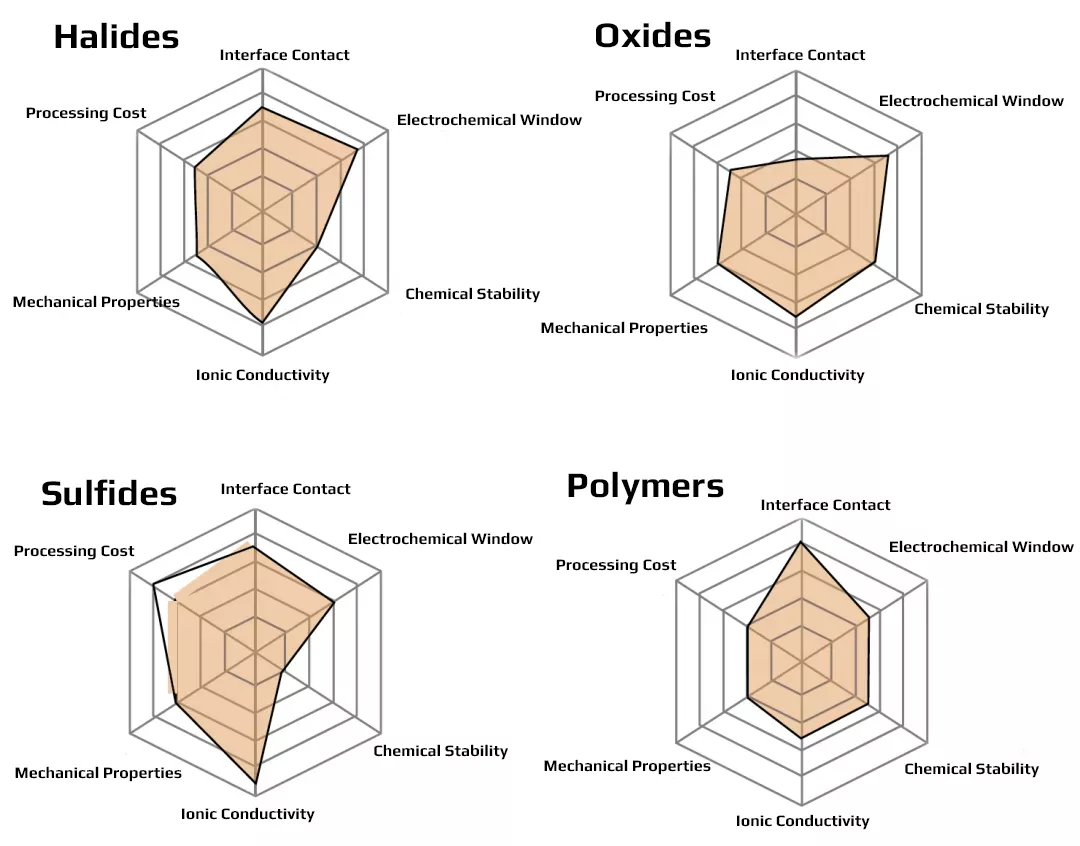
Sulfide electrolytes are the mainstream solid-state electrolyte approach, primarily due to their room-temperature ionic conductivity approaching that of liquid electrolytes and excellent machinability. However, poor chemical stability and high cost hinder their large-scale application. Halide electrolytes, on the other hand, offer satisfactory room-temperature ionic conductivity, relatively low cost, good flexibility, and a wide electrochemical window, demonstrating significant application potential.
Chart 2: Comparison of Main Properties of Four Types of Solid-State Electrolytes
Sulfide: High ionic conductivity, with significant cost reduction potential after scale expansion.
(1)Sulfide electrolytes offer high ionic conductivity, and LiPSCI is currently the mainstream development path.
Sulfide electrolytes are the mainstream electrolyte technology for all-solid-state batteries, primarily due to their high room-temperature ionic conductivity, near-liquid electrolytes, and excellent machinability. Currently, LiPSCI is the mainstream development path, with room-temperature ionic conductivity reaching 1×10⁻² S/cm. Furthermore, they more easily form a self-limiting interfacial layer with the lithium metal anode, reducing the occurrence of side reactions. They also do not contain rare or precious metals.
(2)Sulfide electrolytes currently have a high cost, but there is significant potential for cost reduction after scale-up.
- The current high cost of sulfide electrolytes is primarily due to the high production and preparation costs of the core raw material, lithium sulfide. Taking the LiPSCI coarse powder electrolyte system as an example, the main raw materials include lithium sulfide, phosphorus pentasulfide, and lithium chloride. Lithium sulfide accounts for over 30% of the raw materials by weight and 82% of the total cost. The current production cost of lithium sulfide is high, with a current market price of 2-3 million yuan/ton. This is primarily due to its relatively unstable chemical properties and its tendency to react with water and oxygen in the air. Li2S undergoes hydrolysis to form LiHS and LiOH. Further hydrolysis generates the toxic gas H2S, posing a high production safety risk and placing strict demands on the production environment, storage, and transportation conditions, driving up manufacturing and processing costs.
- Lithium sulfide production routes are diverse, with key priorities focused on purity and cost reduction, offering significant potential for cost reduction. The main methods for producing lithium sulfide include solid-phase method (lithium-sulfur combustion and explosion method, ball milling method, carbon thermal reduction method), liquid-phase method and chemical vapor deposition method (CVD method). In terms of purity, the purity of lithium sulfide produced by various process routes can basically meet the purity requirements of downstream battery factories for lithium sulfide. Among them, the lithium-sulfur combustion and explosion method and the CVD gas phase method have higher purity due to fewer impurities. In terms of cost, the cost of the carbon thermal reduction method and the liquid phase method is relatively lower. Considering that the theoretical cost of lithium sulfide is not high, the future cost reduction path is mainly to expand equipment, improve process continuity, and reduce energy consumption. We believe that there is a large theoretical cost reduction space.
Chart 3: Composition of Manufacturing Cost of Li₆PS₅Cl Electrolyte Powder
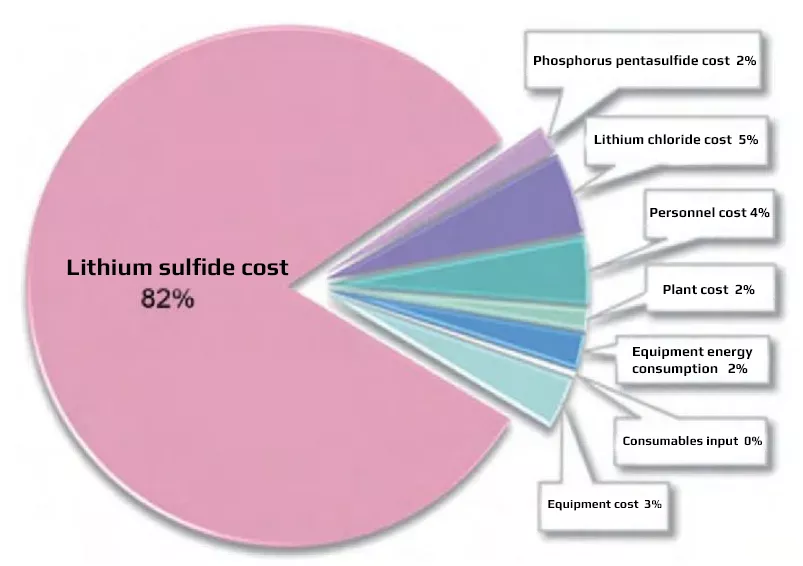
Chart 4: Production Processes, Performance, Production Capacity, and Sample Delivery Progress of Manufacturers Layout in Lithium Sulfide (as of September 2025)
Enterprise |
Production Process |
Purity |
Production Capacity |
Sample Delivery Progress |
| Xiamen Tungsten New Energy | CVD Vapor Phase Method | 99.99% | A pilot test production line with a capacity of 10 tons/year is under preparation | Samples are performing well in client-side tests |
| Shanghai Xiba | Lithium-sulfur Elemental Synthesis Method | 99.99% | A hundred-ton pilot line is under construction | Sample delivery and verification to leading customers are in progress |
| Huasheng Lithium Battery | Liquid Phase Method | 99.99% | A pilot test production line with a capacity of 2 tons/year is under preparation | Sample delivery and verification to downstream customers are in progress |
| Guanghua Technology | Solid Phase Method | 99.99% | The production capacity of lithium sulfide-related solid-state battery materials is 300 tons/year | Lithium sulfide samples have been delivered to customers for testing and are currently in the optimization stage |
| Haichen Pharmaceutical | Liquid Phase Method | 99.95% | The company expects the pilot line to be completed in the third quarter | Achieved sample delivery at the hundred-kilogram level |
| Enjie Co., Ltd. | Carbothermal Reduction Method | 99.90% | The construction and operation of a pilot ton-level annual production capacity have been completed, and the hundred-ton lithium sulfide pilot line has been built | Sample delivery and verification to downstream customers are in progress |
| Ganfeng Lithium | Solid Phase Method | 99.90% | The production capacity has been increased to 20 tons/year in 2024, the second phase of Ganfeng Lithium’s Yichun base is progressing smoothly, and the company expects the total production capacity of lithium sulfide to reach 500 tons/year after commissioning in 2026 | Has supplied goods to more than 20 customers |
| Tianqi Lithium | Solid Phase Method | 99.90% | The 50-ton annual lithium sulfide pilot project has actually been launched and construction has started | The company has accumulated sample making with more than ten downstream customers |
Halides: good overall performance and great application potential
Halide electrolytes have great potential for industrial application in all-solid-state batteries, and lithium zirconium chloride and lithium zirconium oxychloride electrolytes have made rapid progress.
In 2021, Professor Ma Cheng’s team at the University of Science and Technology of China reported for the first time the solid-state electrolyte lithium zirconium chloride (Li2ZrC16), with an ionic conductivity greater than 1mS/cm and low cost. In 2023, Professor Ma Cheng’s research group designed and synthesized a polycrystalline coexisting oxyhalide solid electrolyte Li1.75ZrCl4.75O0.5, with a room-temperature ionic conductivity exceeding 2mS/cm and low cost (Li1.75ZrCI4.75O0.5 can be synthesized from LiCI, ZrCl4, and LiOH·H2O, with a raw material cost of US$11.60/g of water). In addition, it is more compressible than sulfides. Halide solid electrolytes also have high room-temperature ionic conductivity, good flexibility, and a wide electrochemical window that can match high-voltage positive electrode materials. Currently, they are mainly composited with sulfides and used for positive electrode coating. Considering that the conductivity of halide ions can meet battery requirements and their cost is low, we believe that they have great application potential.
Chart 5: Price Comparison of Halide Solid-State Electrolytes
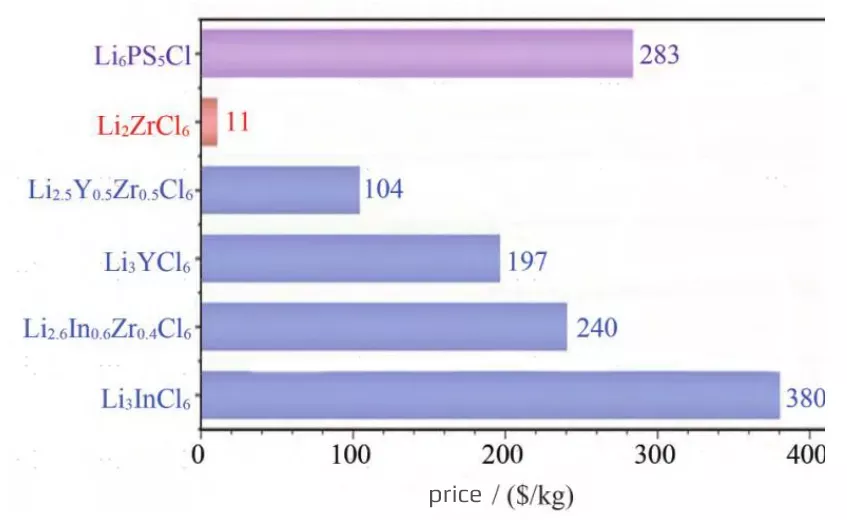
Chart 6: Layout Status of Halide Solid-State Electrolyte Enterprises (as of August 2025)
| Enterprise | Progress |
| Qingtao Energy | The second-generation solid-state battery adopts the route of oxide + halide + polymer. |
| Guoxuan High-Tech | The company is fully developing sulfide all-solid-state batteries and is also laying out the development of halide all-solid-state batteries. |
| EVE Energy | Lays out the technical route of sulfide + halide composite. |
| Enjie Co., Ltd. | The company expects to complete a 10-ton-level pilot line for sulfide halide solid electrolytes by the end of 2024-2025, and enter the mass production stage by the end of 2026-2027, completing a thousand-ton-level mass production line for sulfide halide solid electrolytes and realizing mass production of ultra-thin halide electrolytes. |
| Rongbai Technology | Focuses on two technical routes of sulfide and halide for solid electrolytes. Halide electrolytes have achieved kilogram-level preparation, with electrolyte particle size meeting target requirements and excellent air stability. |
| Desay Technology | In April 2025, the company stated that it has developed and laid out multiple technical routes such as oxide-polymer composite, sulfide, and halide, and successfully developed oxide and sulfide halide solid electrolytes with high ionic conductivity and excellent structural stability. |
2. Positive electrode: In the short term, continue to use high nickel ternary, and in the medium and long term, iterate to high voltage and high specific capacity positive electrode.
Among existing cathode materials capable of mass production, high-nickel ternary cathodes offer high specific capacity and meet the high energy density performance goals of solid-state batteries. We believe that high-nickel ternary systems will continue to be used in the short term. In the long term, further improvements in energy density will likely require further iterations of cathode materials towards newer cathode systems with high voltage and high specific capacity, such as lithium-manganese-rich (LiMnO)-based and high-voltage spinel cathodes.
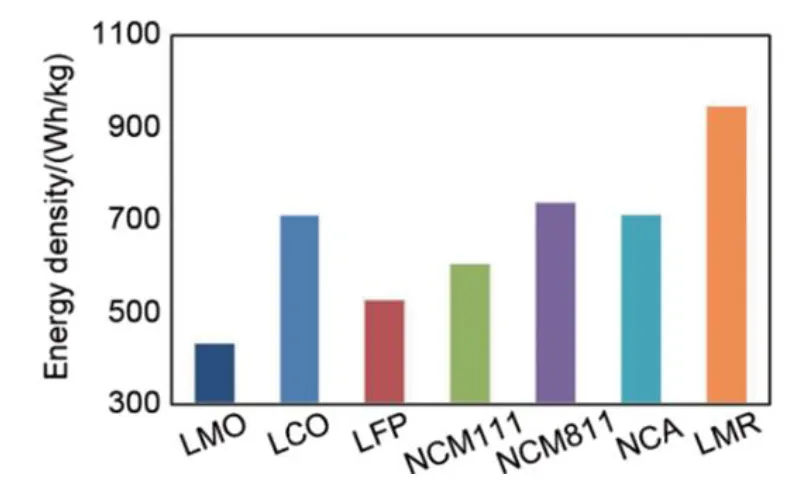
LiMn-rich (LiMnO)-based cathodes offer both high specific capacity and low cost, making them promising candidates for the next generation of new cathode materials. LiMn-rich (LRMO)-based cathode materials (xLi2MnO3·(1−x)LiTMO2, where TM = Mn, Ni, Co, etc.) have attracted widespread attention due to their high discharge specific capacity (greater than 250 mAh/g) and high discharge voltage platform (greater than 4.8 V). Furthermore, LRMOs offer advantages such as high safety and low cost, making them promising candidates for the next generation of new lithium-ion battery cathode materials.
Chart 7: Comparison of energy density between commercial cathode materials and lithium-rich manganese-based materials
3. Anode: Silicon-carbon anodes will be adopted in the short term, while lithium metal anodes will be the focus in the medium and long term.
(1)Lithium metal, with its advantages of high specific capacity and low potential, is expected to become the next-generation anode material.
The theoretical specific capacity of graphite anodes is 372 mAh/g. Silicon-based anodes have a higher theoretical capacity (4200 mAh/g), but they are prone to volume expansion during charge and discharge, which can easily cause the solid electrolyte interface film on the electrode surface to rupture. Furthermore, silicon-based anodes have low electrical conductivity. Lithium metal, with a theoretical specific capacity of 3860 mAh/g, is the lowest known electrode material (-3.045 V compared to a standard hydrogen electrode) and has a low density (0.53 g·cm⁻³), making it a promising next-generation anode material.
(2)The main processes for producing lithium metal anodes include calendaring and vapor deposition, focusing on thinning, flattening, and cost reduction.
Calendering is the mainstream method for producing lithium foil due to its mature process, high production efficiency, and cost advantages. At the same time, evaporation coating and liquid phase methods have high technical potential and development space due to their advantages in ultra-thin preparation and film uniformity.
Chart 8: The calendering method process is relatively mature, while the liquid phase method and evaporation plating method have great potential
| Process Method | Thickness Range | Maturity | Advantages | Disadvantages | Main Layout Enterprises |
| Calendering Method | Above 20μm | Commercially applied | High production efficiency, capable of preparing continuous thin rolls; low cost | Difficult to prepare ultra-thin lithium foil; uneven thickness tends to occur when <50μm; ultra-thin production requires multiple calendering, time-consuming and cost-increasing | Ganfeng Lithium, Tiantie Technology |
| Evaporation Plating Method | Up to within 10μm | In mass production verification | Can prepare ultra-thin lithium layers, with higher lithium metal purity, uniform surface, and good substrate adhesion | Low deposition rate, requires vacuum environment, expensive equipment, and relatively high processing cost | Yinglian Co., Ltd. |
| Liquid Phase Method | 1 – 50μm | In mass production verification | Can obtain dense and undamaged thin-layer structures via secondary calendering and anti-sticking rolls; simple process, great cost reduction potential | Poor wettability, uneven thickness; high surface energy restricts lithium penetration on the substrate, active utilization rate decreases without a lithiophilic coating | Dosun Technology, Zhongyi Technology |
| Electrochemical Deposition Method | Micron level | Successful laboratory test | Can prepare pure and uniform lithium metal foil with controllable thickness; low process temperature, promising cost reduction prospects | Unstable deposition morphology, prone to porous structures, certain safety risks, relatively high electrolyte recovery cost | Laboratory stage |
(3)The commercialization of lithium metal anodes is accelerating.
Several manufacturers are accelerating their development of lithium metal anode products. Tiantie Technology has signed a procurement framework agreement with Xinjie Energy to supply 100 tons of copper-lithium composite ribbons. Yinglian Shares is leveraging its evaporation process to develop integrated lithium metal/composite current collector materials. Dow Technology is utilizing its proprietary melt coating method to mass-produce ultra-thin lithium-copper composite anodes (<20µm).
Chart 9: Layout of Lithium Metal Anode Enterprises
| Company | Layout Status |
| Ganfeng Lithium | The company’s second-generation hybrid solid-state lithium battery uses metallic lithium as the anode. The high-energy battery developed in solid-state batteries has an energy density of 420Wh/kg, a cycle life of over 700 times, and a sample with an energy density of 500Wh/kg has been developed, which can pass severe safety tests such as 200°C hot box and needle penetration. |
| Tiantie Technology | Anhui Tiantie can safely produce battery-grade metallic lithium with a purity of 99.97 – 99.98%; In May 2025, the company signed a strategic cooperation framework agreement with Fangjie Energy. It is agreed that after the commissioning of its first 2GWh solid-state battery production line, the company will be responsible for supplying metallic lithium materials for this production line. In principle, Fangjie Energy’s annual purchase volume from the company shall not be less than 100 tons, and the purchase period shall be no less than 5 years from the commissioning date. |
| Yinglian Co., Ltd. | Relying on the technical reserve advantages of hot stamping technology, the company develops lithium metal/composite current collector anode integrated materials for solid-state batteries and carries out relevant technical cooperation with leading automobile companies, expecting to deliver the above new materials to customers within 1 year. |
| Putailai | The company continues to research and develop lithium metal anode materials, solving the problems of dendrites, volume expansion of the metal anode, and the interface between the anode and solid electrolyte by constructing a new three-dimensional skeleton structure. At the same time, the company’s lithium metal anode forming equipment adopts the calendering composite process, and the prototype equipment development has been completed and put into use. |
| Daoshi Technology | The company’s ultra-thin anode is prepared by melt liquid phase coating method. The product has the characteristics of thin thickness (less than 20μm), fast coating speed, and low cost. The technical route is original, and it can further realize the preparation of lithium-coated copper ultra-thin composite anode, shortening the assembly process of lithium batteries. |
| Zhongyi Technology | The company already has relevant technologies, processes and products such as lithium-copper metal integrated composite anode materials for solid-state batteries, which can improve the interface affinity between metallic lithium and copper foil, thereby enhancing the cycle stability of lithium metal batteries. |
4. Current collector: porous copper foil and corrosion-resistant current collector, suitable for sulfide all-solid-state system
(1)Porous copper foil: A large number of micropores are formed on the copper foil surface, increasing the contact area between the solid electrolyte and the copper foil, enhancing wetting and improving the lithium ion transfer efficiency of solid-state batteries. This makes it more compatible with solid-state batteries while also offering advantages in weight reduction, cost reduction, and lightweighting.
(2)Corrosion-resistant current collectors: Sulfur ions in sulfide electrolytes easily react with copper current collectors, leading to electron conduction blockage and decreased all-solid-state battery performance. The industry chain is currently developing a variety of corrosion-resistant current collector solutions, primarily nickel-plated and nickel-iron current collectors.
(3)Nickel-plated current collectors: A nickel layer is deposited on the copper foil surface through electroplating. The dense physical morphology of the nickel layer effectively blocks the reaction between the sulfide electrolyte and the current collector, preventing electron conduction blockage and interfacial failure.
(4)Nickel-iron current collectors: Nickel-iron alloy strips are thinned through processes such as rolling and annealing. For example, Yuanhang precision manufactures nickel-iron current collectors, using a rolling process combined with microalloying to improve performance and reduce resistivity.
Chart 10: Comparison of Nickel-Plated Current Collectors and Nickel-Iron Current Collectors
| Nickel-Plated Current Collector | Nickel-Iron Current Collector | |
| Base Material | Copper Foil | Nickel-Iron Alloy (Austenitic Stainless Steel Containing 8%-12% Nickel) |
| Surface Treatment | Nickel-Iron Alloy (Austenitic Stainless Steel Containing 8%-12% Nickel) | No Additional Plating Layer Required, the Body is an Alloy |
| Production Process | Electroplating (Roll Pressing + Continuous Deposition) | Cold Rolling Forming + Annealing Treatment |
| Pore Structure | High Porosity Can Be Designed (e.g., Three-Dimensional Skeleton) | Dense and Pore-Free (Etching Required for Pore Formation) |
| Electrical Conductivity | Excellent (Copper-Based Conductivity 5.96×10⁷ S/m) | Medium (Nickel-Iron Alloy Conductivity Approx. 1.4×10⁶ S/m) |
| Corrosion Resistance | Excellent (Nickel Layer Blocks Electrolyte, Resists Hydrofluoric Acid Corrosion) | Good (Chromium Passivation for Corrosion Resistance, but Prone to Pitting in Sulfide Electrolyte) |
| Interface Stability | Excellent (Nickel Forms a Stable Alloy Layer with Lithium) | Medium (LiₓFeOₓ Passivation Layer Easily Forms at Stainless Steel Interface) |
| Gravimetric Energy Density | High (Copper-Based Density 8.96g/cm³) | Low (Stainless Steel Density 7.9g/cm³) |
| Cost | Medium | Low (No Plating Layer Required, Material Cost Reduced) |
Equipment side: Equipment comes first, and the value of all-solid-state battery equipment has increased significantly
The production process of traditional liquid lithium batteries is relatively mature, and the value of the front and middle stages of production and manufacturing is relatively large. The traditional liquid lithium battery production line is mainly divided into three major stages: front-end pole piece manufacturing, middle-stage battery cell assembly, and back-end performance testing. Among them, the value of the front-end pole piece manufacturing and middle-stage battery cell assembly equipment is relatively large.
Semi-solid-state batteries are highly compatible with existing liquid battery production lines, and the value of all-solid-state battery equipment has been significantly improved. Compared with the production process of liquid lithium batteries, semi-solid-state batteries can be transformed and upgraded on the basis of existing liquid battery production lines. The core changes are the addition of solid electrolyte coating, roller pressing equipment upgrades, and the use of high-voltage formation equipment. Overall, the transformation compatibility of existing production lines is relatively high. All-solid-state batteries introduce new processes and new equipment in both the front and middle stages, and the manufacturing difficulty is further increased, which drives the value of solid-state battery equipment to increase significantly.
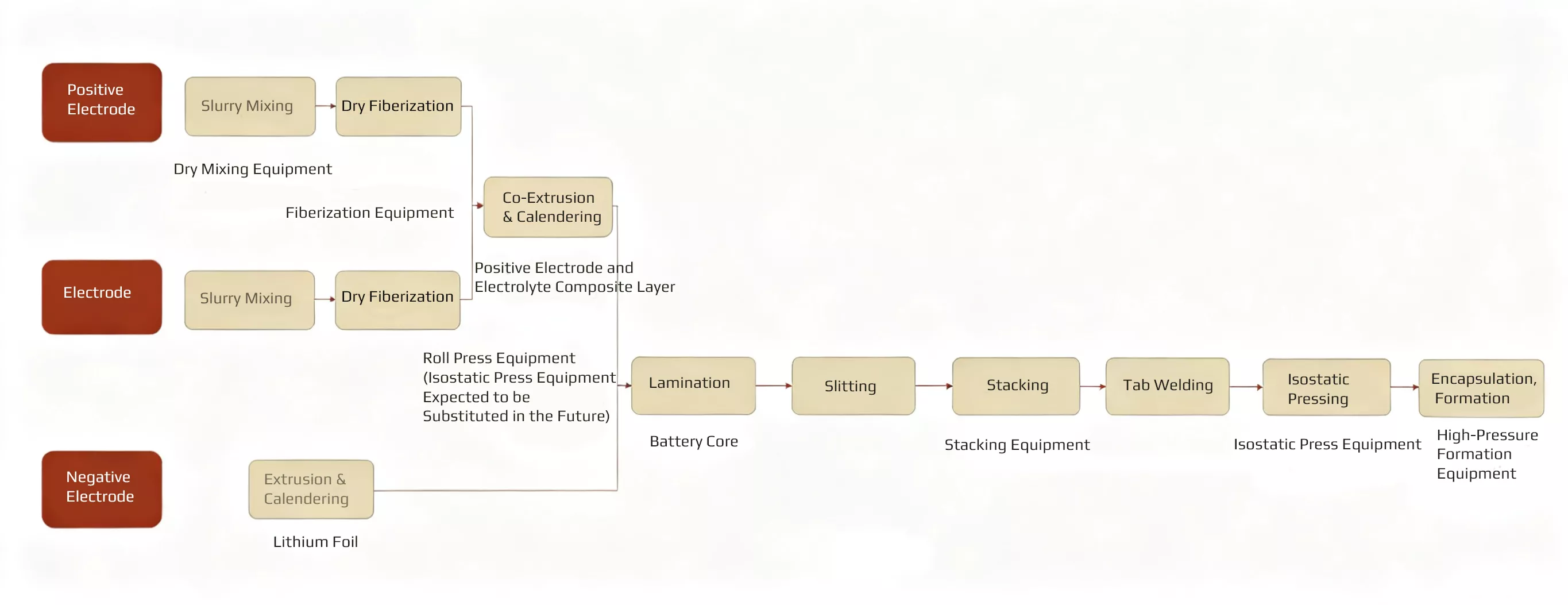
Specifically: (1)Front stage: pole piece manufacturing/electrolyte film formation stages need to match the dry electrode process. For the sulfide technology route, sulfide electrolytes are sensitive to air, water and polar organic solvents. On the one hand, the feeding and conveying process needs to be isolated from air and sealed, and the equipment automation rate needs to be improved. On the other hand, the electrode manufacturing/electrolyte film forming process needs to match the dry electrode process. The dry electrode technology does not use organic or polar solvents, so it matches the sulfide solid-state battery manufacturing process. Among them, dry film forming is the core process, with high precision requirements, high process difficulty, and high equipment value.(2)Middle stage: Use lamination instead of winding, add glue frame printing + isostatic pressing treatment, etc. Since solid electrolytes are brittle and not suitable for winding processes, lamination processes are usually required, and the lamination precision requirements are improved. The new glue frame printing process mainly prints the resin to the edge of the electrode to form a circular frame, which plays a supporting and insulating role under pressure. The isostatic pressing treatment is mainly to ensure close contact between the solid electrolyte and the electrode interface and improve the ion conductivity of the solid-solid interface. The value of the mid-stage equipment has increased significantly compared to the liquid stage due to the higher precision requirements for the stacking machine and the addition of new frame printing and isostatic pressing equipment.(3)Back-end: The liquid injection stage is eliminated, and the pressure requirements for high-pressure forming are increased. The upgrade of the back-end high-pressure forming equipment has increased the pressure requirements, mainly to improve the solid-solid interface contact and activate the ion channel.
Chart 11: Production Flow Chart of Solid-State Batteries
1.Front-end Process: Dry film formation is a core new step in the front-end process.
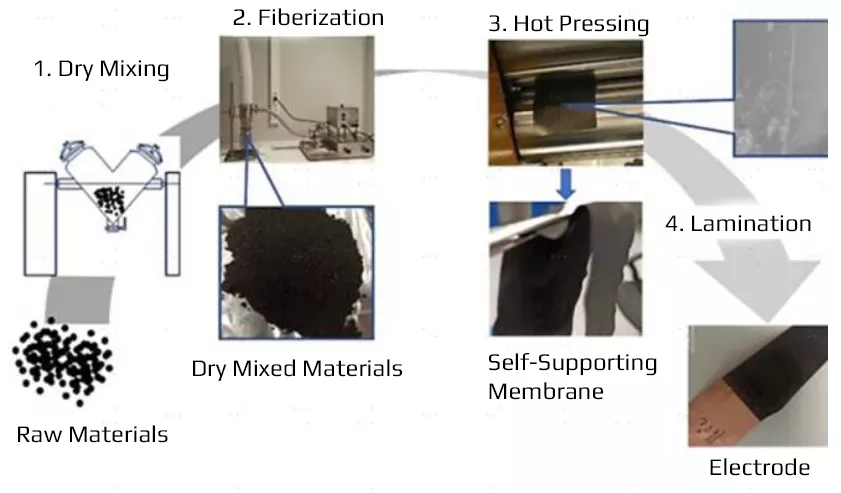
Dry-process electrodes are formed by uniformly mixing active materials, binders, and conductive agents in a solvent-free environment, fiberizing them, and then rolling them onto a current collector. Compared to wet-processes, dry-process electrodes are more suitable for sulfide electrolytes and offer advantages such as higher energy density, lower costs, and improved production efficiency.
Chart 12: Advantages of Dry Process
| Wet Electrode | Dry Electrode | |
| Production Efficiency | More steps, time-consuming for drying and solvent recovery | Fewer steps, no drying time required |
| Cost | Costs related to electrode drying/solvent (NMP) recovery, material costs | No use of solvent (NMP), no costs related to electrode drying and solvent recovery, lower total cost |
| Environmental Friendliness | Toxic solvents, high energy consumption, large carbon dioxide emissions | Solvent-free, lower energy consumption, less carbon dioxide emissions |
| Electrode Performance | Poor particle adhesion, higher porosity, limited electrode thickness; problems such as cracks, delamination, and poor flexibility in electrodes | Reduced porosity, better particle adhesion, higher electrode mechanical strength, larger areal capacity, higher compaction density; can control electrode thickness and uniformity of thick electrodes, no cracks generated |
| Application Adaptability | Not suitable for the preparation of thick electrodes and solid-state electrodes | More suitable for solid-state batteries, prelithiation, large cylindrical batteries |
| Battery Performance | Can achieve lower energy density, worse durability, lower compaction density, lower areal capacity, higher AC impedance | Can achieve higher energy density, improved rate performance, better durability, lower AC impedance |
(1) Mixing: Use a blender to mix the active material, solid electrolyte, conductive agent, binder, etc. If the mixing is uneven, it will directly affect the effect of the next fiberization process. The current mainstream dry mixing equipment methods include double blade grinding method and ball milling method.
(2)Fiberization: The fiberization process mainly uses air flow mills, twin screw extruders, strong mixers, etc. to generate PTFE network structure to connect the active material particles together.
(3)Roller pressing film formation: It is the core link of the dry process. The fiberized mixture passes continuously through the roller gap between the rollers. The pressure applied by the rollers makes the active material layer compacted, with a smaller thickness and increased density, and promotes close contact between the active material particles, conductive agent and binder, while improving the bonding force between the electrode and the current collector. The goal is to obtain an electrode with uniform thickness, dense structure, required porosity and mechanical strength. The dry electrode preparation process has high requirements on the operating pressure, rolling accuracy and uniformity of the roller press, and has certain technical barriers.
Chart 13: Process Flow of Dry Electrode
The industrialization of dry-process electrode technology is accelerating. Nanopore has launched a series of multi-roller equipment, featuring leading parameters such as the number of rollers, width, and speed. The integrated mixer homogenizer developed in collaboration with Honggong Technology has achieved its target parameters. Xianhui Technology and Qingtao Energy are collaborating on core dry-process equipment, which is entering the detailed commissioning phase. Yinghe Technology’s third-generation integrated equipment is improving electrode manufacturing efficiency, and its mixing equipment has been delivered to leading customers.
Chart 14: Layout Progress of Dry Electrode of Some Lithium Battery Equipment Enterprises (as of August 2025)
| Company | Latest Progress |
| Nakenuoer | The multi-roll continuous rolling equipment of Qingyan Nake (a company in which Nakenuoer holds shares) has undergone multiple upgrades and iterations. It has launched series of dry electrode equipment such as eight-roll and ten-roll, supporting the production of pole pieces with various materials (e.g., ternary, lithium iron phosphate, silicon carbon). |
| Honggong Technology | Honggong Technology and Qingyan jointly developed a hybrid homogenizer. The core indicators have approached the set parameter targets, and it has been delivered to customers for use. |
| Mannest | Mannest has launched a solid-state battery pole piece manufacturing solution, which includes a dry powder processing system, a dry multi-roll film-forming composite system, and a wet electrolyte thin coating system. The company’s dual-line product layout of “wet process + dry process” in the field of solid-state batteries has initially taken shape. At present, a number of core products (e.g., dry mixing equipment, twin-screw fiberization equipment, multi-roll film-forming equipment, wet electrolyte thin coating system) have contributed to orders. The equipment is being delivered to customers’ sites one after another, and the commissioning of some equipment has met customer requirements. |
| Liyuanheng | Liyuanheng has overcome key technologies including dry electrode coating equipment, electrode roll pressing & electrolyte thermal composite integrated machine, rubber frame printing & lamination integrated machine, and high-voltage formation & grading equipment. |
| Xianhui Technology | The core dry process equipment developed by Xianhui Technology in cooperation with Qingtao Energy has been successfully delivered to customers and entered the fine commissioning stage. The company will continue to actively promote the production of core dry process equipment for solid-state batteries. |
| Winhe Technology | Winhe Technology has launched the third-generation integrated equipment for dry mixing fiberization + dry film-forming process, which greatly improves the manufacturing efficiency of pole pieces, saves production costs, and enables higher compaction density and energy density at the product end. The dry mixing equipment independently developed and produced by the company has also been successfully delivered to the sites of leading domestic customers. |
2.Mid-stage process: Lamination replaces winding, and new plastic frame printing + isostatic pressing equipment is added
In the middle stage, the resin is first brushed onto the edge of the electrode to form a circular frame, which plays a supporting and insulating role under pressure. It is then assembled through a lamination process, and then the density is increased and the interface contact is improved through an isostatic pressing stage.
(1) Glue frame printing: All-solid-state batteries use lamination and isostatic pressing processes. Under high pressure, the electrodes are easily deformed and short-circuited. Therefore, a new glue frame printing process is needed. The main process is to print the resin on the edge of the electrode to form a circular frame, which plays a supporting and insulating role under pressure. The glue frame printing process is mainly divided into screen/steel screen printing, UV printing, glue coating/dispensing, etc.
(2) Lamination: Due to the poor flexibility of solid electrolytes, the winding method is likely to cause uneven stress in the electrolyte and cracking, affecting battery performance. Solid-state batteries are more suitable for lamination assembly to ensure the structural integrity of the solid electrolyte.
(3) Isostatic pressing: In order to improve the density of the material and solve the interface gap and impedance problems, it is necessary to improve it by applying pressure and other means. Isostatic pressing equipment is mainly used for integrated pressing after solid-state battery cells are stacked. The pressure is 500-600MPa. The workpiece is evenly pressurized from all directions to make the electrode and electrolyte materials in close contact, reduce the interface impedance, and improve the mechanical strength.
Chart 15: Schematic Diagram of Insulating Adhesive Frame Printing Solution
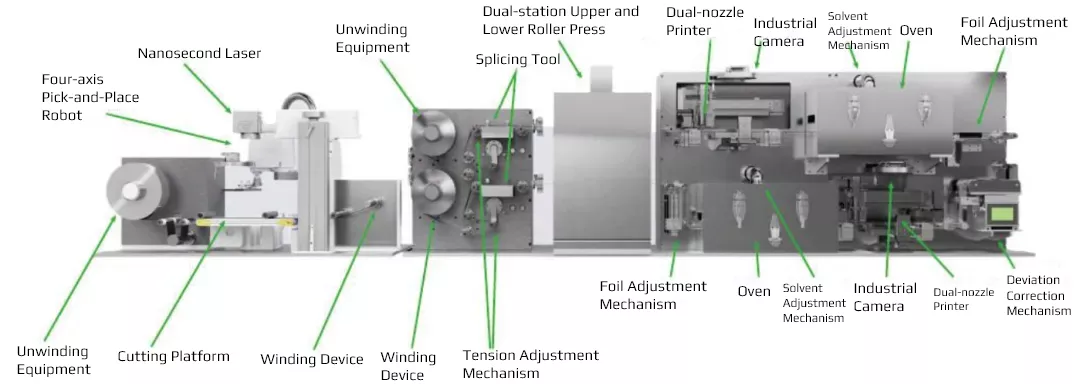
Chart 16: Classification of Isostatic Presses
| Isostatic Pressing Technology | Cold Isostatic Pressing (CIP) | Warm Isostatic Pressing (WIP) | Hot Isostatic Pressing (HIP) |
| Pressure Medium | Liquid (water) | Liquid (water or oil) | Gas (argon or nitrogen) |
| Temperature | Room temperature or near room temperature (below 93°C) | Medium temperature, usually not exceeding 500°C | High temperature (1000-2200°C) |
| Pressure | 100-600MPa | 50-500MPa | 100-200MPa |
| Cycle Time | Short | Medium | Long |
| Equipment Cost | Low | Medium | High |
| Applications | Large/complex components, temperature-sensitive materials | Materials that cannot be formed at room temperature (e.g., graphite, polyamide, rubber materials, etc.) | High-performance applications (aerospace, medical implants, engineering ceramics) |
3.Back-end process: Use high pressure forming to improve solid-solid interface contact
Upgrade high-voltage formation equipment. Conventional battery formation requires a constraint pressure of 3-10 tons, while solid-state battery formation requires a constraint pressure of 60-80 tons (10MPa pressure/single battery cell). Solid-state batteries require high-voltage formation mainly due to the solid-solid interface characteristics and ion conduction mechanism.
(1) Solve the solid-solid interface contact problem: There are microscopic gaps between the solid electrolyte and the electrode. High pressure is required to eliminate the interface gaps and promote solid-solid interface bonding.
(2) Activate ion conduction channels: High-voltage formation can form ion channels at the interface contact, reduce impedance, thereby accelerating the migration rate of ions and improving the ionic conductivity of the solid electrolyte.
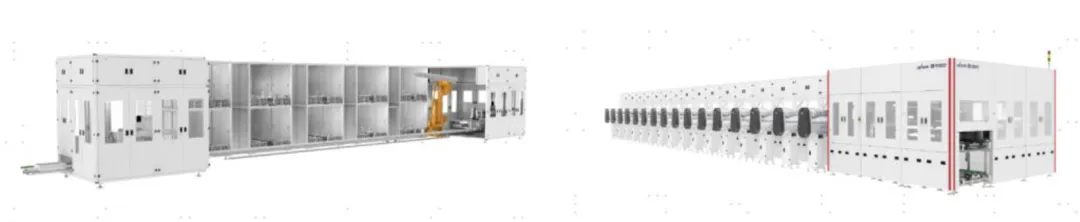
In summary, all-solid-state batteries introduce new processes and equipment in both the front and middle stages. The number of laser welding equipment in the middle stage increases, and the equipment in the back stage needs to be upgraded and renovated. Specifically: (1) The loading and conveying process needs to be isolated from air and sealed, and the equipment automation rate is improved; (2) The electrode manufacturing/electrolyte film formation process is adapted to the dry electrode process, and dry mixing, fiberization and roller film forming equipment are added; (3) The middle stage adopts lamination instead of winding, and new equipment such as glue frame printing and isostatic pressing is added, and the number of laser welding equipment increases; (4) The high-voltage formation equipment in the back stage is upgraded.

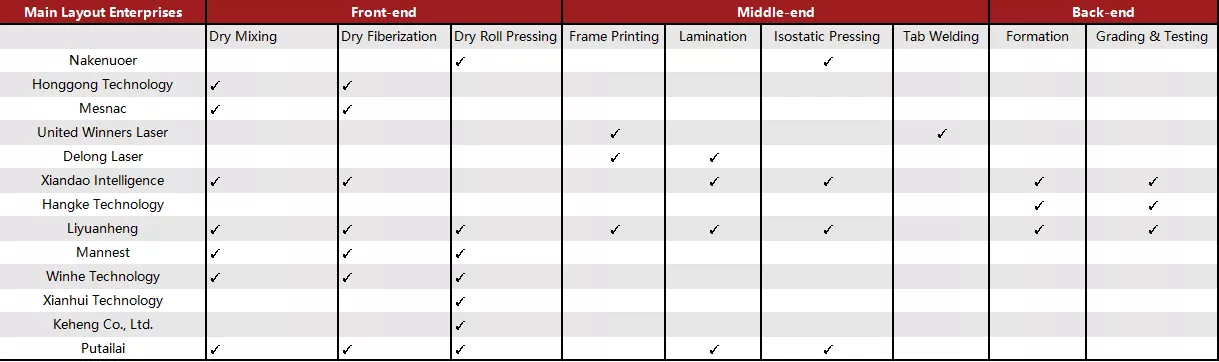
Market space estimation and investment strategy
1.Market space
Driven by policy support, downstream application scenario demand, and superimposed technological progress, the industrialization rhythm of solid-state batteries is clear and the market space is vast.
On the equipment side, we estimate the solid-state battery equipment market to be worth 44.3 billion yuan in 2030, including 31.3 billion yuan for all-solid-state battery equipment and 13 billion yuan for semi-solid-state incremental equipment. On the materials side, we estimate the market potential for lithium sulfide, zirconium tetrachloride, LLZO, lithium metal anodes, silicon-carbon anodes, and lithium-rich manganese-based cathodes to be 5 billion yuan, 2.4 billion yuan, 1.6 billion yuan, 3.8 billion yuan, 3.4 billion yuan, and 2.7 billion yuan, respectively.
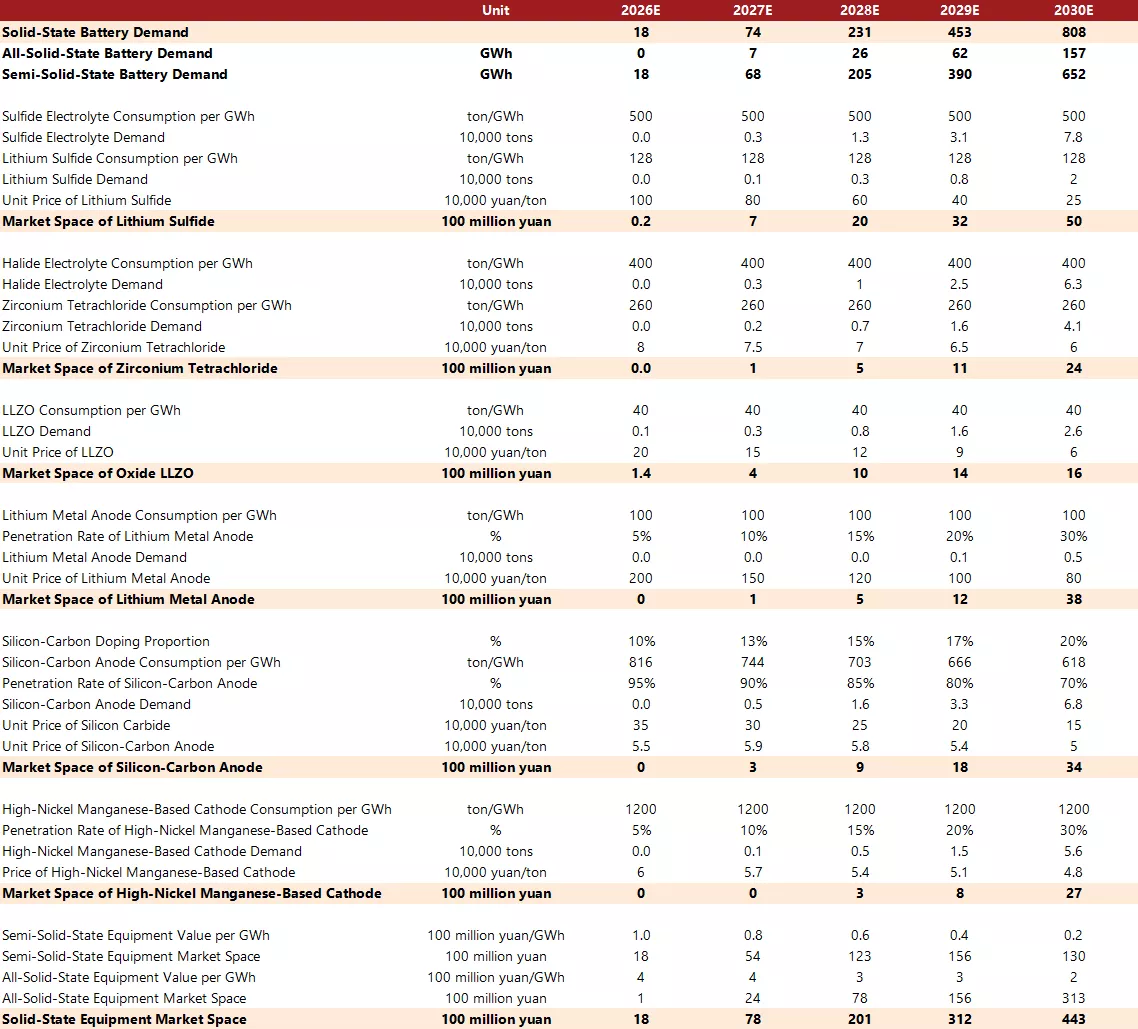
2.Investment Strategy
The development trend of solid-state batteries is clear. With leading manufacturers gradually launching pilot lines in 2025 and continued breakthroughs in mass production lines in 2026, we believe the solid-state battery industry chain is poised for a major market rally, and battery, material, and equipment manufacturers with relevant investments are poised for upward investment opportunities.
3.Risk Warning
(1) Solid-state battery technology progress is slower than expected. Solid-state technology is currently in the early stages of industrialization. If the progress of related technology research and development and testing and certification does not meet expectations, it may affect the industrialization process of solid-state batteries.
(2) Risk of technology route change. At present, solid-state battery technology is not yet mature and the material route has not yet fully converged. For example, in terms of solid-state electrolytes, sulfides are considered to be the mainstream route in the future, but polymers, oxides, halides and composite electrolytes are also under continuous research and development. If other routes achieve new technological breakthroughs, it may have an adverse impact on manufacturers deploying sulfide electrolytes.
(3) Downstream demand is lower than expected. If the demand for solid-state batteries in eVTOL, consumer electronics, power batteries and other fields is lower than expected, it may affect the commercialization process of solid-state batteries.


