
In the development of lithium – ion battery technology, the performance of battery cells and manufacturing processes have always been key elements of core competitiveness. Currently, some leading products exhibit remarkable advantages in terms of battery – cell characteristics and lamination – process applications.
Battery Cells: Safety, Longevity, and High – Efficiency Combined
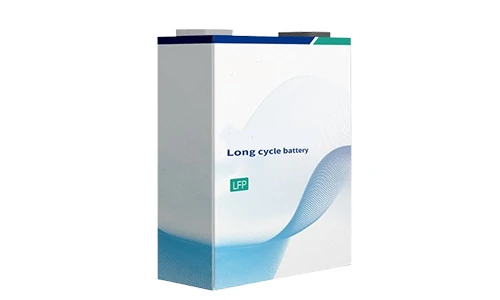

Battery cells with ultra – military – grade safety stand out in lithium – ion battery products. Even when subjected to extreme conditions such as gunshots and needle pricks while fully charged, these cells can remain stable without catching fire or exploding, far surpassing conventional safety standards. Such products are the first to pass strict safety tests involving shooting at fully – charged batteries, providing a reliable energy guarantee for high – risk application scenarios like aerospace and high – end equipment.
Ultra – long – life battery cells adopt an advanced special in – situ gel lamination process and perform outstandingly in terms of charge – discharge cycle life. When charged and discharged at 0.3C, the cycle life can exceed 15,000 times; when charged and discharged at 1C, the cycle life can also exceed 8,000 times. This characteristic significantly extends the battery’s service life, effectively reducing the battery replacement costs and maintenance frequencies of equipment, and has great application value in fields such as energy – storage power stations and electric vehicles.
High – rate and large – capacity battery cells are designed to meet the power demands of heavy – duty equipment. They can achieve a continuous charging rate of 2C, and the instantaneous discharge current can reach 15C, providing strong and stable power output for large construction machinery, electric ships, etc., enabling the equipment to operate efficiently.
Battery cells with strong extreme – temperature adaptability have expanded the application range of lithium – ion battery products. In low – temperature environments, the charging/discharging efficiency can still reach 90% at – 35°C; in high – temperature environments, the discharge efficiency at 60°C can reach 102%, far higher than the industry – average low – temperature working limit of – 20°C, and can operate stably in extreme climatic conditions such as severe cold or intense heat.
Lamination Process: Innovation Brings Performance Leaps
Compared with the traditional winding process, the lamination process has significant advantages in multiple aspects. In terms of energy density, the lamination process, with its higher space – utilization rate, can increase the energy density by about 5% compared with the winding process, allowing more electrical energy to be stored in a limited space and improving the endurance of equipment.
In terms of structural stability, the internal structure of the lamination process is more uniform, and the reaction rates are consistent, ensuring the stability of the battery during charging and discharging. However, due to the presence of C – corners in the winding process, the internal reaction degrees and rates are inconsistent, affecting the stability of battery performance.In terms of fast – charging and discharging performance, the multi – pole – piece parallel connection design of the lamination process reduces the internal resistance, enabling large – current charging and discharging in a short time and improving the rate performance of the battery. In contrast, during the charging and discharging process of the winding process, the degradation rate of active substances at high – temperature positions accelerates, and other positions decay rapidly, resulting in poor charging and discharging performance.
In terms of safety, the lamination process has a uniform stress distribution, reducing potential safety hazards caused by stress concentration. The winding process is prone to problems such as powder shedding, burrs, pole – piece expansion, and diaphragm stretching at the bending positions, which may lead to safety accidents such as short – circuits.In terms of service life, due to the low internal resistance of the lamination process, less heat is generated during high – rate use, which helps maintain the stability of the battery’s chemical system and thus prolongs the battery’s service life. However, the winding process is prone to deformation in the later stage, affecting the cycle life of the battery.
The technological breakthroughs in battery – cell performance and lamination processes in the lithium – ion battery field have injected new vitality into the industry’s development and also provided solid technical support for meeting the increasingly diverse market demands, driving lithium – ion battery products towards a more safe, efficient, and long – lasting direction.
Your content goes here. Edit or remove this text inline or in the module Content settings. You can also style every aspect of this content in the module Design settings and even apply custom CSS to this text in the module Advanced settings.


